Understanding a Trisomy 18 Diagnosis
Clear Information. Real Choices. Support for every step ahead.
Where Are You in the Diagnosis Process?
I received a positive NIPT
Understand what a high-risk screening result means
Ultrasound Findings Raised Concerns
Learn what ultrasound findings can-and cannot-tell you
We Have a Confirmed Trisomy 18 Diagnosis
Understand the diagnosis, your options, and questions to ask next
What Is Trisomy 18?
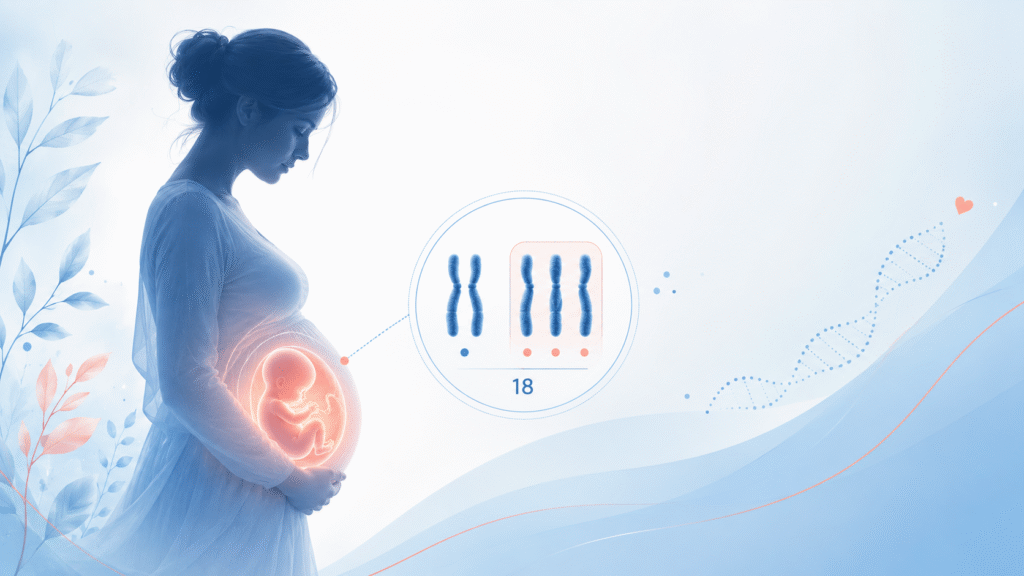
A chromosomal condition caused by having additional genetic material from chromosome 18.
Most people have 46 chromosomes arranged in 23 pairs. Normally, a baby receives one copy of chromosome 18 from each parent.
With Trisomy 18, there is additional chromosome 18 material.
- Also called Edwards Syndrome
- Involves Chromosome 18
- Can occur as Full, Mosaic or Partial Trisomy 18

Full, Mosaic & Partial Trisomy 18
Trisomy 18 doesn’t occur the same way in every person.
Understanding your baby’s specific chromosome result can help you have more informed conversations with your genetic counselor and team.
What is Full Trisomy 18?
In Full Trisomy 18, cells tested contain an entire additional copy of chromosome 18.
Instead of two copies of chromosome 18, there are three.
Full Trisomy 18 is the most common form of the condition.
The medical effects can vary considerably from one baby to another. Chromosome type alone cannot predict every medical condition a child will experience or exactly how that child will develop.

What is Mosaic Trisomy 18?
In Mosaic Trisomy 18, the additional chromosome 18 is found in some cells, while other cells have the typical two copies.
For example, testing may find a percentage of cells with Trisomy 18 and another percentage without it.
The percentage found in a blood, placental, or amniotic fluid sample does not necessarily tell the doctors what percentage is present in every organ or tissue in the baby’s body.
Because of this, mosaic Trisomy 18 can have a particularly broad range of presentations.
Some individuals may have significant medical needs, while others may be more mildly effected.

What is Partial Trisomy 18?
In Partial Trisomy 18, only a portion of chromosome 18 is present in an additional copy rather than the entire chromosome.
The effects depend in part on:
- which portion of chromosome 18 is duplicated
- How much genetic material is involved
- Whether another chromosome is involved in a rearrangement
- Whether the chromosome change occurred spontaneously or resulted from a parental chromosome rearrangement
In some cases, genetic testing of the parents may be recommended to determine whether one parent carries a balanced translocation or another chromosome rearrangement.
A genetic counselor can explain the exact chromosome findings and whether they have implications for future pregnancies.

Understanding Your NIPT Result
NIPT, also called cell-free DNA Screening (cfDNA), is a blood screening test that can be performed during pregnancy.
It analyzes small DNA fragments circulating in the pregnant person’s bloodstream. Much of the DNA being evaluated originates from the placenta.
NIPT can screen for several chromosome conditions, including:
- Trisomy 21
- Trisomy 18
- Trisomy 13
- Certain sex chromosome differences, depending upon the test
NIPT is currently considered the most sensitive and specific screening test, but it is still a SCREENING TEST – NOT A DIAGNOSTIC TEST.
What Does "High Risk" or "Positive for Trisomy 18" mean?
A positive or high-risk NIPT means that the screening identified a pattern associated with an increased likelihood of Trisomy 18.
It does not automatically mean your baby has Trisomy 18.
False-positive results can occur.
Because cell-free DNA largely reflects DNA from the placenta, differences can occasionally exist between placental chromosomes and the baby’s chromosomes.
Your report may also include something called the:
Positive Predictive Value — PPV
The PPV estimates the likelihood that a positive screening result represents a true fetal chromosome condition.
PPV can be affected by several factors, including the pregnant person’s age and the underlying prevalence of the condition.
If your NIPT is positive for Trisomy 18, you should be offered genetic counseling, detailed ultrasound evaluation, and the option of diagnostic testing.
NIPT is a Screening Test - Not a Diagnosis
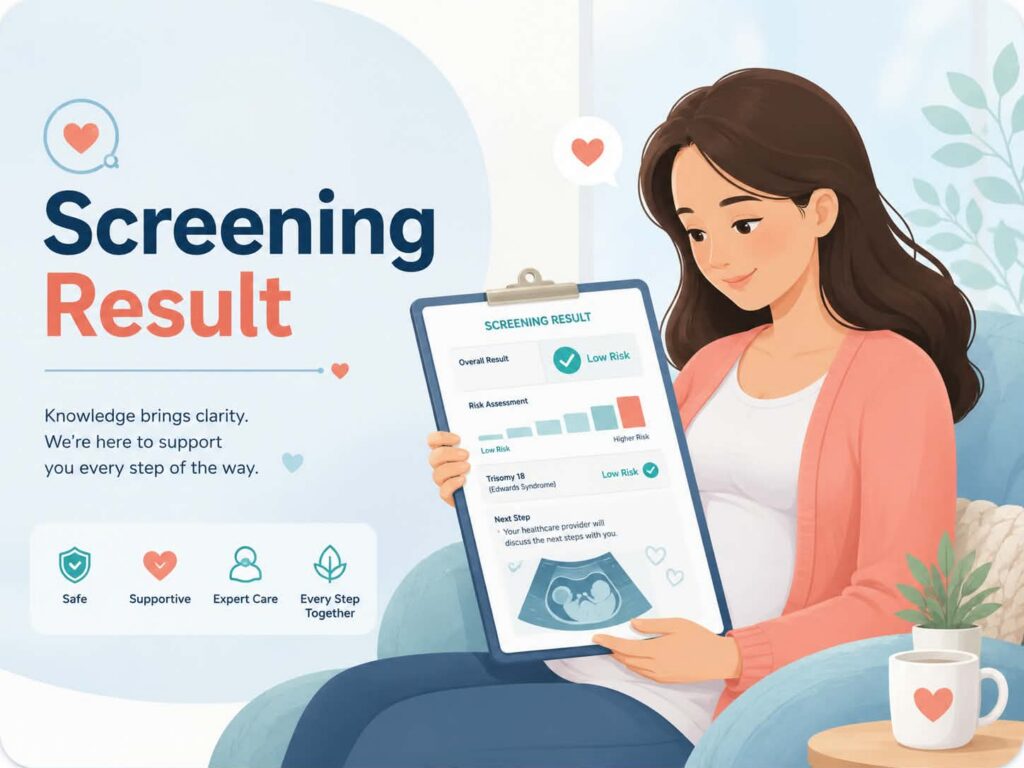
Low Risk
The screening identified no increased risk
High Risk/Positive
The screening identified an increased risk of Trisomy 18
Diagnostic Confirmation
Chromosome Testing has confirmed Trisomy 18
Screening -> Diagnosis Pathway
- Screening Result
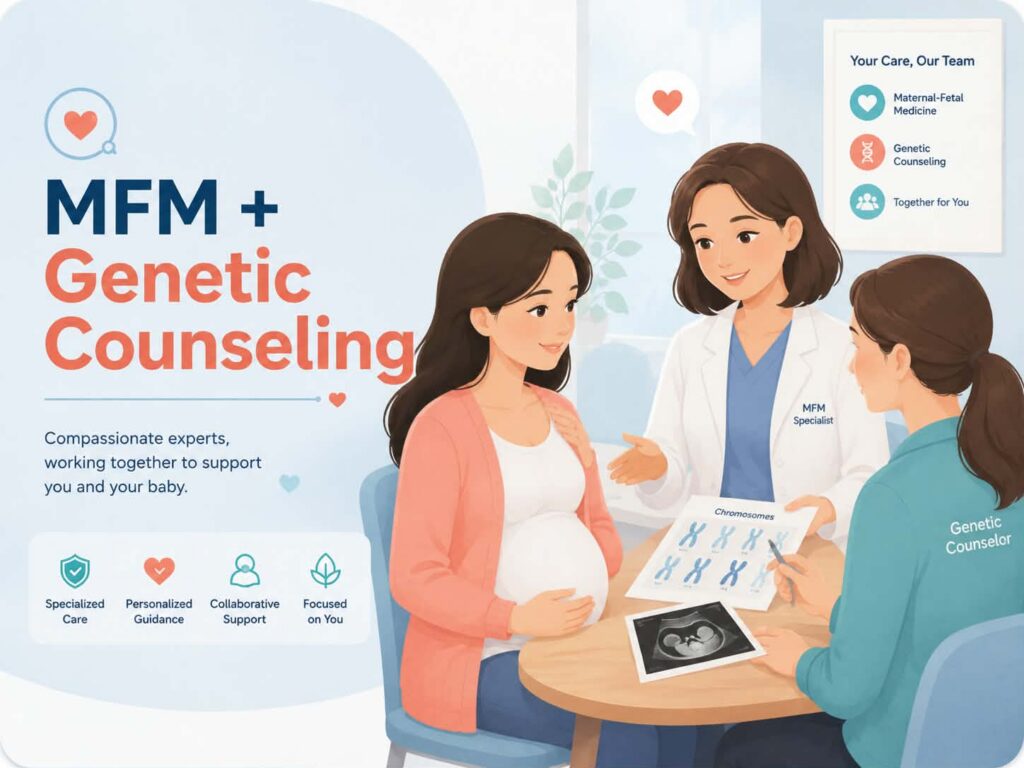
- MFM + Genetic Counseling
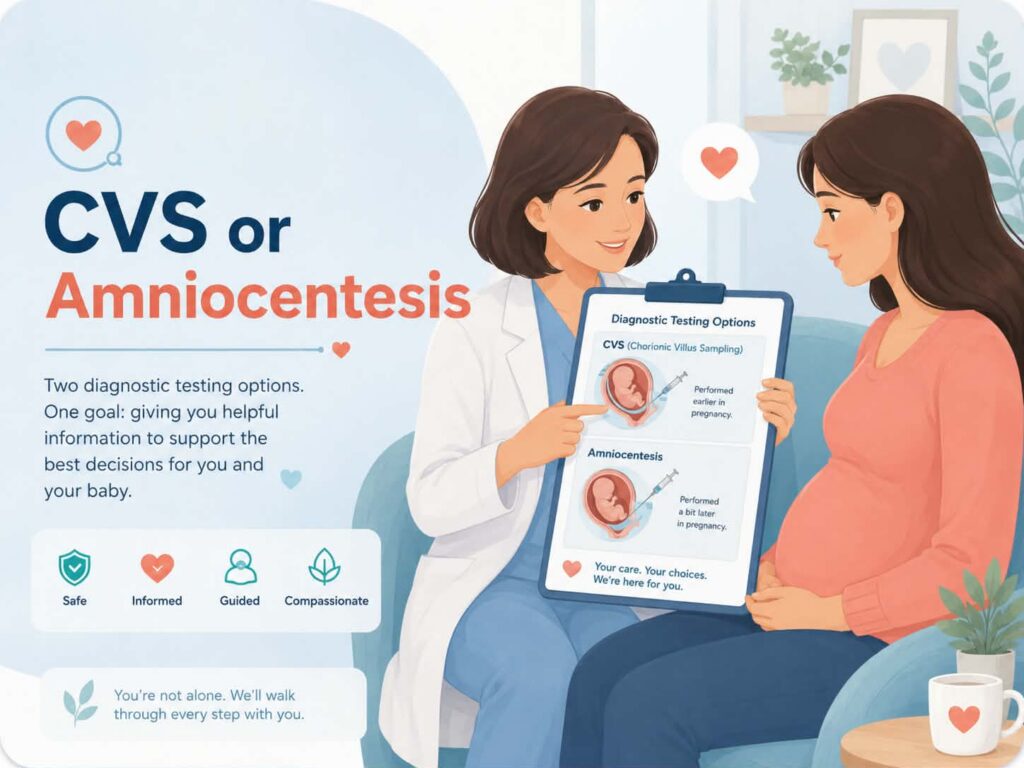
- CVS or Amniocentesis
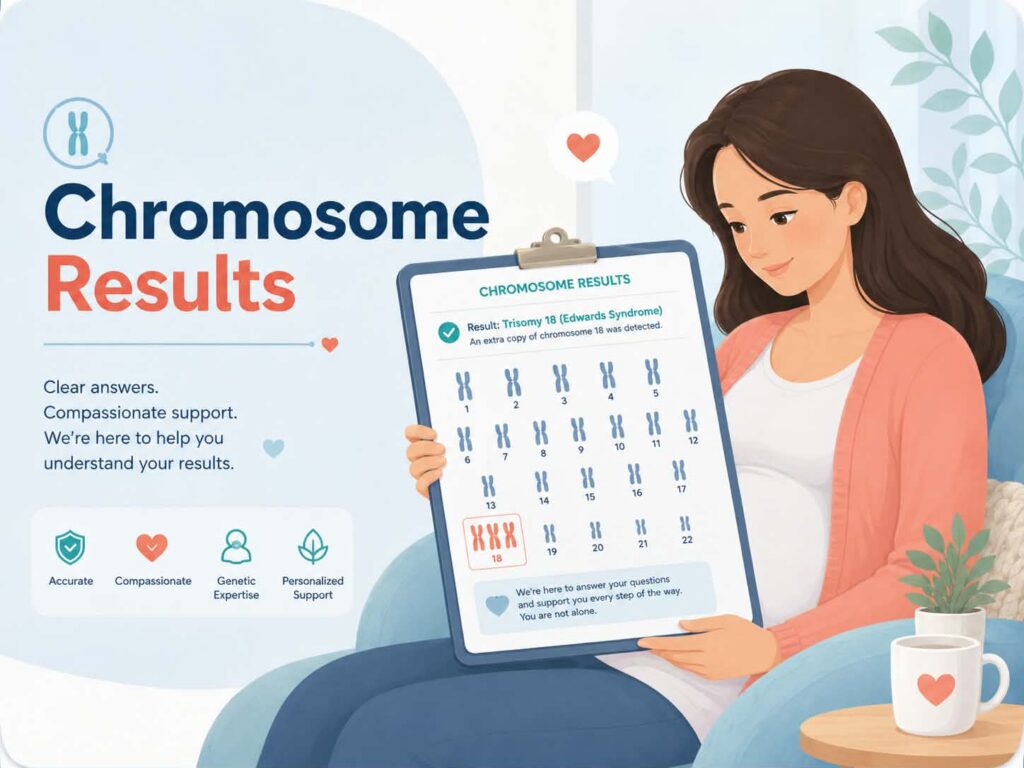
- Chromosome Results
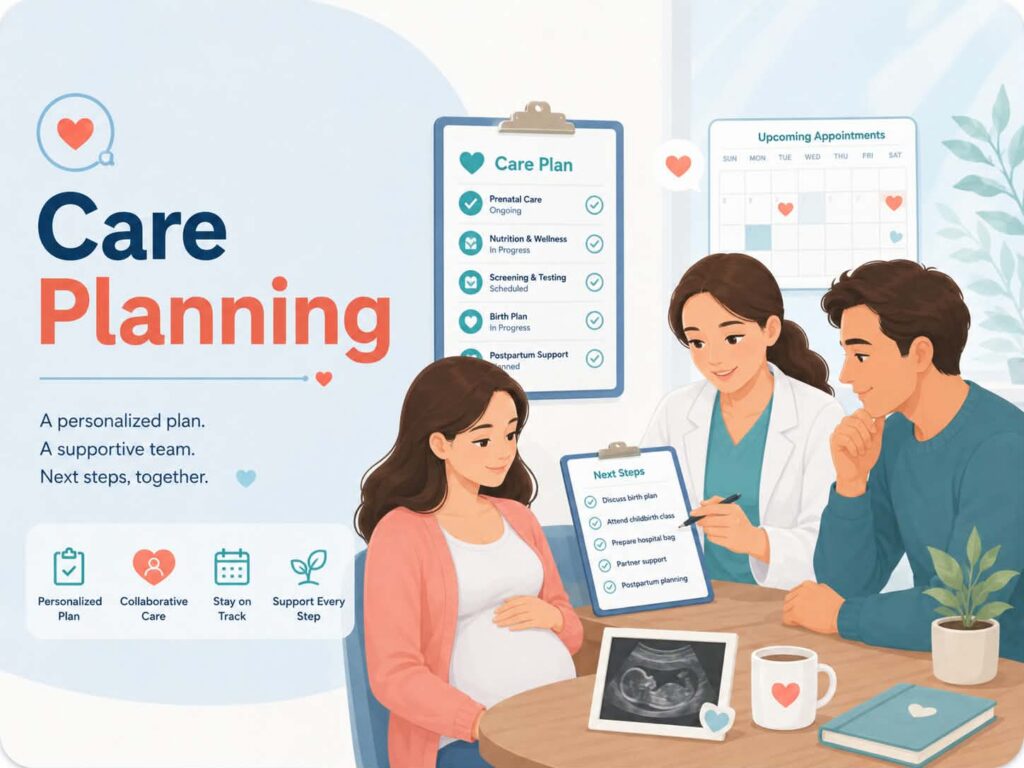
- Care Planning
Understanding Diagnostic Testing
Chronic Villus Sampling (CVS)
CVS is a diagnostic test that examines a small sample of placental tissue. The sample can be used for chromosome testing to determine whether Trisomy 18 or another chromosomal condition is present.
- Usually performed earlier in pregnancy, often around 10-13 weeks
- Uses a small sample of placental tissue
- Provides diagnostic chromosome testing
- Testing may include a karyotype and/or chromosomal microarray
- Because the placenta is tested, confined placental mosaicism can sometimes complicate interpretation
- Additional testing, such as amniocentesis, may sometimes be recommended depending on the results
Amniocentesis
Amniocentesis is a diagnostic test that removes a small amount of amniotic fluid surrounding the baby. The fluid contains fetal cells that can be analyzed for chromosomal conditions such as Trisomy 18.
- Usually performed at 15 weeks or later
- Uses a small sample of amniotic fluid
- Amniotic fluid contains fetal cells
- Provides diagnostic chromosome testing
- Testing may include a karyotype and/or chromosomal microarray
- Can help clarify results after an abnormal screening test or certain CVS findings
Questions to Ask Before Diagnostic Testing
What information will this test give us?
Ask whether the test will confirm or rule out Trisomy 18 and what type of chromosome analysis will be performed.
Which test is recommended for my pregnancy - CVS or Amniocentesis?
The answer may depend on gestational age, ultrasound findings, screening results, and your individual circumstances
What type of chromosome testing will be performed?
Ask whether your sample will receive a rapid test such as FISH or QF-PCR, a full karyotype, a chromosomal microarray, or another type of genetic testing.
How long will it take to receive results?
Different portions of chromosome testing can have different turnaround times.
What are the risks of the procedure?
Ask your MFM specialist to explain the risks and benefits based on your individual pregnancy and the center performing the procedure.
Could the results show Mosiac Trisomy 18?
Ask how the mosaic findings would be interpreted and whether additional testing is needed.
If CVS shows mosaicism, could it be confined to the placenta?
Ask whether an amniocentesis might be recommended later to determine whether the chromosome finding is also present in fetal cells.
What happens if the result confirms Trisomy 18?
Ask what appointments, specialists, ultrasounds, fetal echocardiograms, or care-planning discussions would be offered next.
Can we meet with a genetic counselor before making a decision?
A genetic counselor can help explain the differences between screening and diagnostic testing and what different results may mean.
Do I have time to think about my options?
Ask whether there is a medical reason testing needs to occur within a particular timeframe, and what options are available if you need additional time
Diagnostic testing is a personal decision. You can ask questions, request additional counseling, and take time to understand your options before deciding what is right for your family.
What May Be Seen on Ultrasound
Sometimes clinicians first suspect Trisomy 18 based on prenatal ultrasound findings.
Other times, ultrasound findings are discovered after a high-risk screening result.
Possible findings associated with Trisomy 18 can involve several areas of development.
(Click below on the picture to learn more)

Heart
Congenital heart differences may occur with Trisomy 18. Your provider may recommend a fetal echocardiogram
Brain
Certain structural differences involving the brain may sometimes be identified
Hands
Clenched Fists; overlapping fingers
Feet
Rocker Bottom Feet
Kidneys
Structural Differences may occur
What Does the Detailed Anatomy Scan Evaluate?
The detailed anatomy scan, usually performed between 18–22 weeks, is a comprehensive ultrasound that looks closely at your baby’s development. The sonographer or maternal-fetal medicine (MFM) specialist will examine each area of the body to look for differences in structure, growth and function. This scan can help identify many of the features commonly associated with Trisomy 18, but it can also provide important information about your baby’s overall health.
Every baby is unique, and not all findings will be present. Your care team will review the results with you and explain what they mean for your pregnancy and next steps.
- Brain
- Facial structures
- Spine
- Heart
- Lungs
- Stomach
- Kidneys
- Bladder
- Arms and Legs
- Hands and Feet
- Placenta
- Umbilical Cord
- Amniotic Fluid
- Growth
Questions for your MFM (Maternal Fetal Medicine)
You do not need to remember every question. Save or screenshot the ones that matter to you.
About the Diagnosis?
- Is Trisomy 18 confirmed?
- What testing produced this result?
- Is it Full, Mosaic or Partial?
About My Baby
- What appears typical?
- What findings have been indentified?
- How is growth?
- Should we see pediatric cardiology?
Monitoring
- How often will ultrasounds be peformed?
- Will addtional fetal monitoring be recommended?
Delivery
- Where should I deliver?
- What level NICU is available?
- Which specialists should be present?
Genetic Testing and Counseling
- Can you show me the actual chromosome report?
- May I request a copy of my child's chromosome report?
- Is this Full, Mosaic or Partial?
- What testing was performed?
- Is parental testing recommended?
- Is a translocation present?
- What does this mean for future pregnancies?
- What can this test predict?
- What can it not predict?
Your Next Appointment Checklist
Lorem ipsum dolor sit amet, consectetur adipiscing elit. Ut elit tellus, luctus nec ullamcorper mattis, pulvinar dapibus leo.
- Bring your NIPT/genetic report
- Ask whether Trisomy 18 is confirmed
- Ask Full, Mosaic or Partial
- Ask what ultrasound findings were seen
- Ask about Fetal Echocardiography
- Ask whether additional genetic testing is recommended
- Ask what specialists your baby may need
- Request copies of reports and imaging
- Write down your questions
"Your Baby is More Than a Diagnosis"
A chromosome result provides important medical information, but it does not tell you everything about your child.
Every baby has an individual medical picture.
Families deserve complete, current and balanced information so they can make informed decisions.
What Happens Next?
Preparing During Pregnancy
Specialists, monitoring and fetal testing
Planning for Delivery
Hospital, NICU, and Birth Planning
Understanding Medical Care
Heart, Respiratory, feeding and other possible needs
Connect with Families
Stories, support and ESA resourves