


CVI is a brain-based vision condition: the eyes can be healthy, but the brain has difficulty processing what is seen.
Why it matters in Trisomy 18 (Edwards Syndrome): neurological differences, periods of low oxygen, seizures, or brain structure changes common in T18 increase the likelihood of CVI. Recognizing this connection early helps children access targeted vision strategies, therapies, and school supports.
Neurological basis: Both involve differences in how the brain organizes signals—CVI for vision, T18 more broadly—so visual processing can be inconsistent.
Common functional signs: preference for bright/high-contrast colors, delayed visual response, difficulty with clutter/complexity, better vision with movement, and stronger peripheral than central viewing.
Developmental overlap: feeding/communication challenges, as well as motor tone differences (low tone/spasticity), can limit a child’s visual attention. CVI strategies help “unlock” attention.
Care impact: A CVI diagnosis, alongside T18, can open doors to low-vision services, CVI-informed IEP accommodations, and funding for adaptive tools.
Phase 1 (0–3): Most affected; goal = build visual behavior
Phase 2 (3–7): Moderate; goal = integrate vision with function
Phase 3 (7–10): Best functional vision; goal = reduce CVI characteristics
Ask for a CVI Range assessment from a TVI (Teacher of the Visually Impaired) or low-vision specialist.
Environment: reduce clutter; present one target at a time; use consistent lighting.
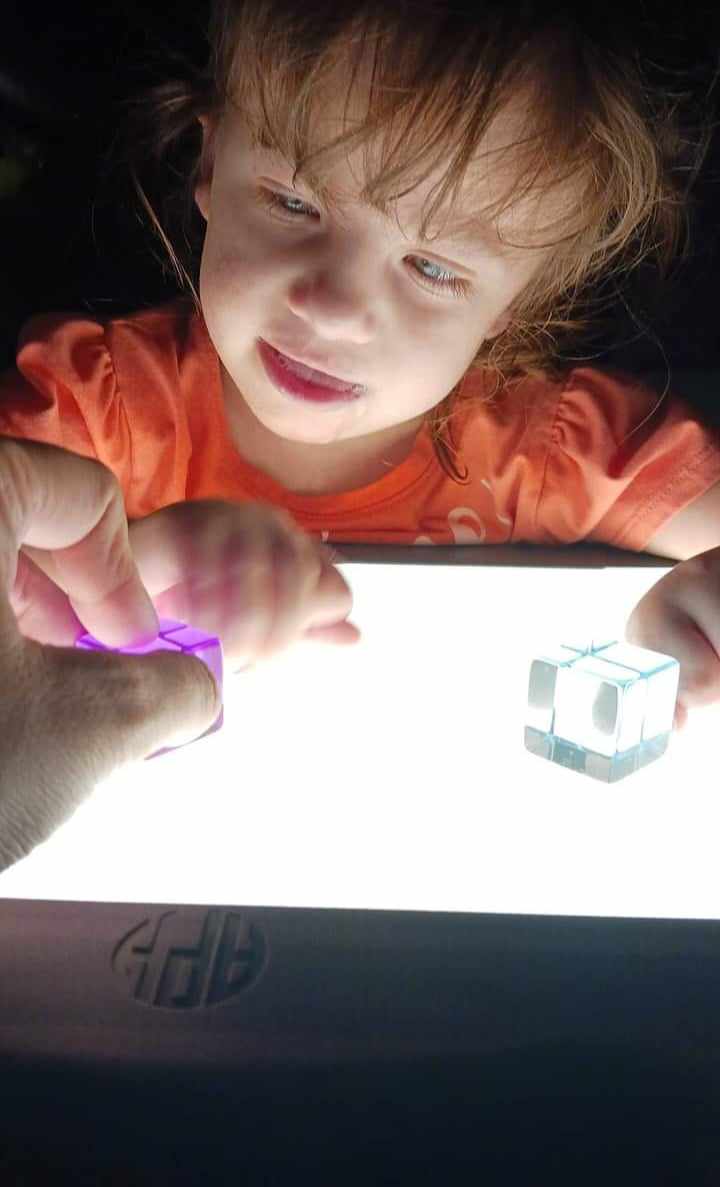
Color/contrast: start with preferred bright colors (often red/yellow), bold outlines, lightbox or backlighting.
Movement & positioning: add gentle movement to “wake up” vision; use positions that support tone/airway so attention lasts longer.
Multi-sensory cues: pair visual with tactile and auditory input; repeat in predictable routines.
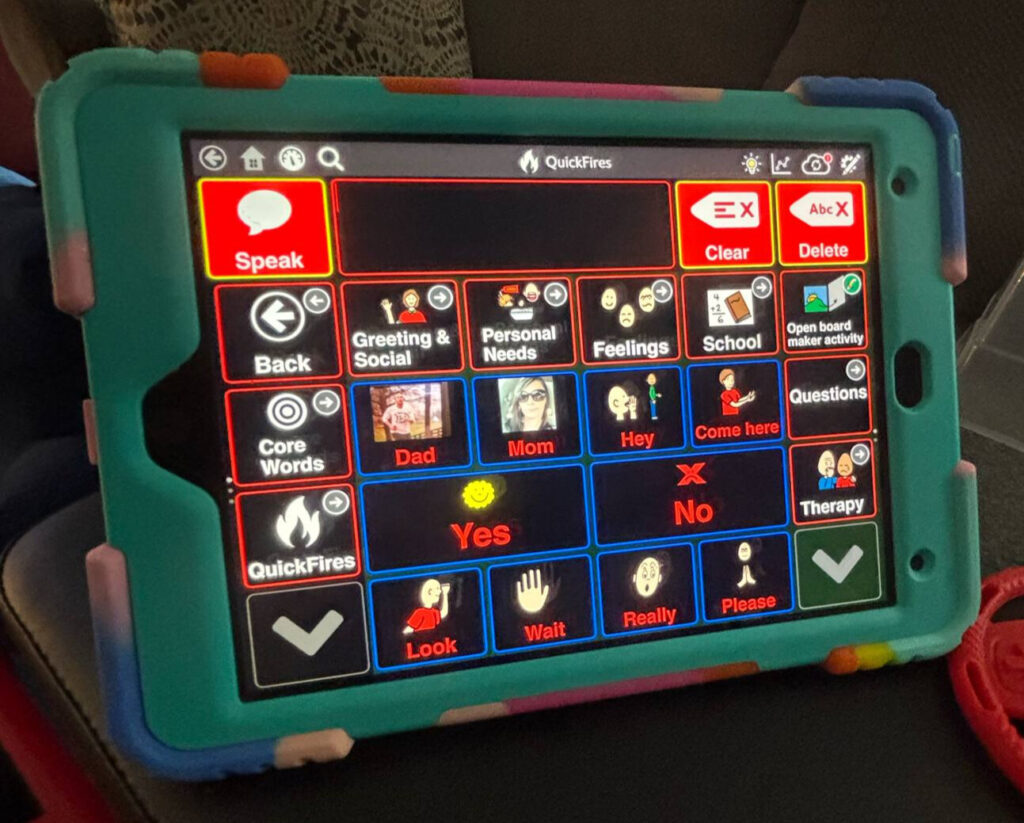
Tech & tools: high-contrast apps, switch toys with lights, CVI-friendly visuals, AAC with simplified fields.
School supports (IEP/504): CVI Range-informed goals, clutter-reduced materials, seating for best visual field, extra latency time, CVI-trained TVI consults, orientation & mobility as needed.